Magento SEO as Infrastructure: A Practical Playbook for Scalable Growth
Magento SEO usually does not fail because the platform is weak.
It fails because the store has too much freedom without enough structure.
That distinction matters. Magento gives teams deep control over URLs, canonicals, metadata, rendering, cache behavior, layered navigation, and extension logic. That is exactly why strong stores can outperform lighter SaaS setups. It is also why weak decisions multiply across thousands of URLs.
The real job is not "doing SEO tasks." It is building a stable system that decides what should exist, what should be crawled, what should be indexed, and which pages deserve authority.
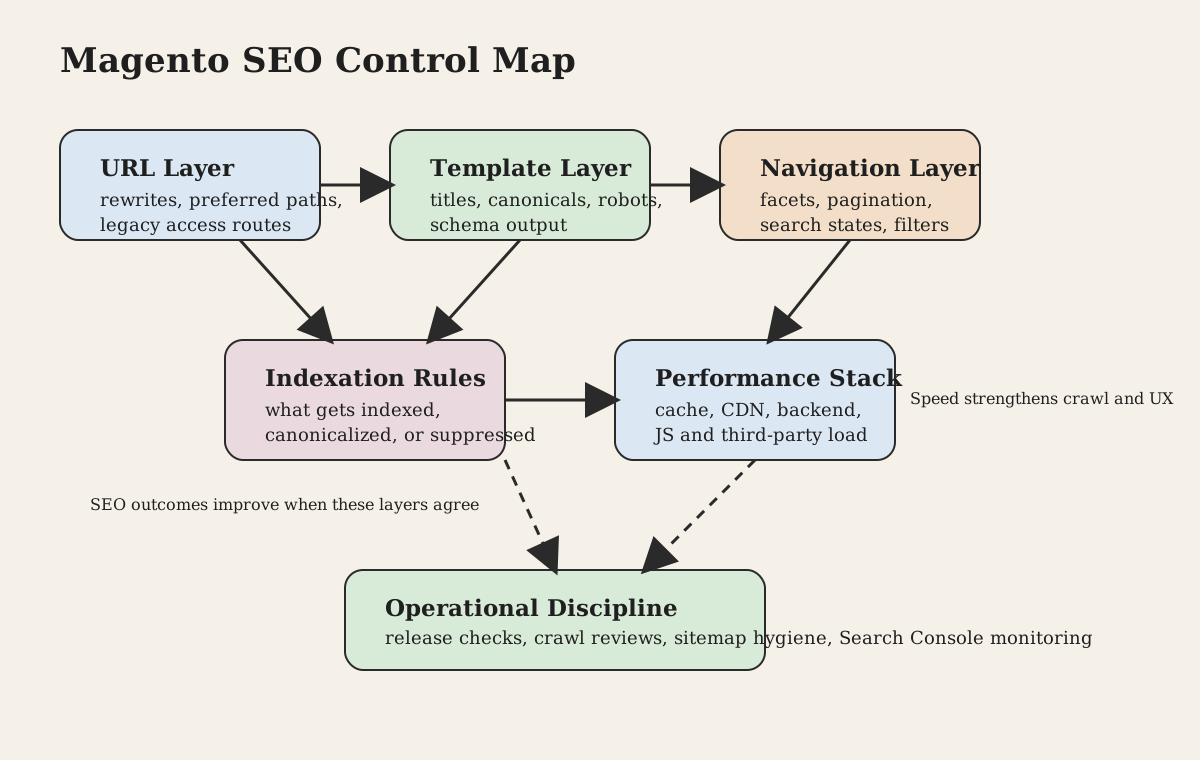
Magento Has an SEO Control Problem, Not an SEO Problem
On simpler platforms, many structural decisions are hidden behind defaults. That protects teams from some mistakes, but it also limits how far they can optimize.
Magento works differently.
A well-run Magento store can control:
- URL rewrites and preferred paths
- canonical behavior across product, category, and filtered pages
- robots and indexation rules
- sitemap composition
- cache and delivery strategy
- rendering behavior in more complex front-end stacks
That control is valuable, but only when there is one clear source of truth.
If two extensions both try to write canonicals, if filtered URLs leak into the sitemap, or if internal links point to non-preferred paths, Google gets mixed signals. Once that happens at catalog scale, rankings usually flatten before teams understand why.
The First Pattern to Audit: Configuration Drift
Most Magento SEO problems are not dramatic launch-day failures. They build up slowly.
One extension gets added for metadata. Another one changes breadcrumbs. A theme customization introduces a different canonical condition. A merchandising request creates new layered-navigation rules. Six months later the store still "works," but the SEO system is no longer coherent.
That is configuration drift.
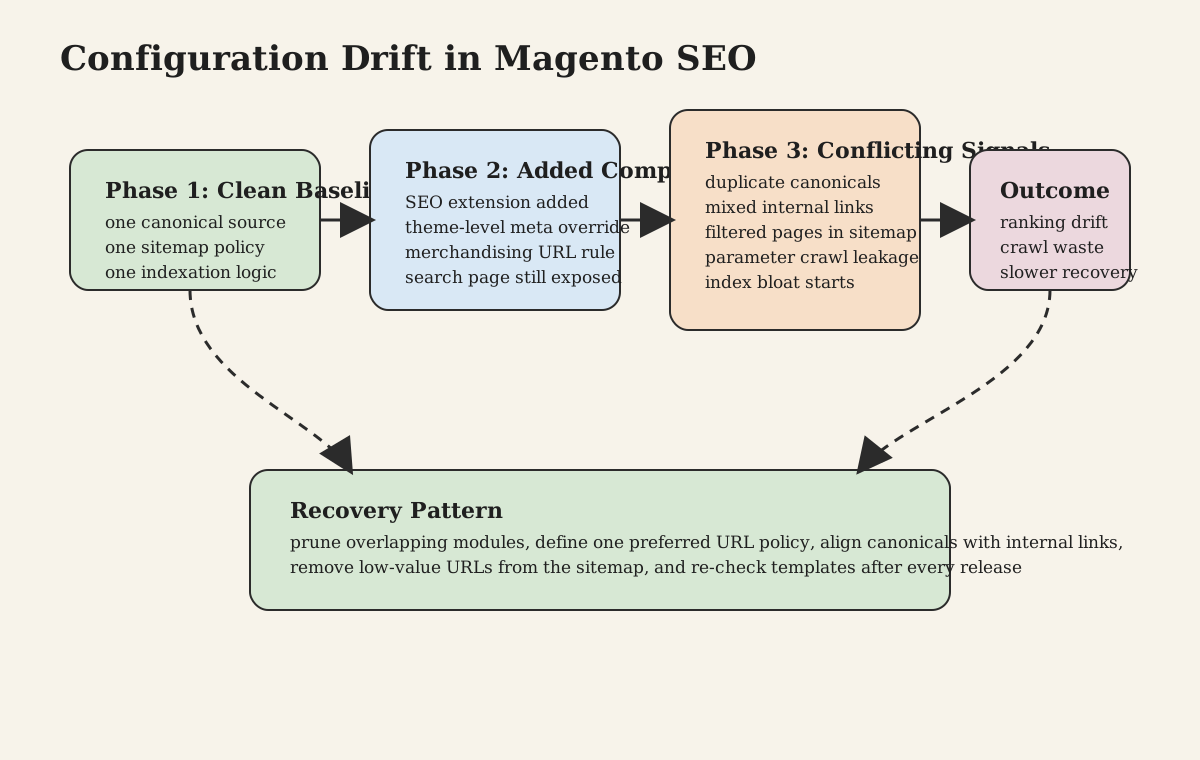
Common symptoms look like this:
- two modules output competing meta tags
- category pages and filtered pages use inconsistent canonical logic
- internal search pages become indexable
- sorting and tracking parameters create crawl waste
- the XML sitemap includes low-value URLs while excluding strategic landing pages
A useful audit mindset is simple: do not start from tools, start from signal consistency.
If the same content can be reached through multiple paths, ask:
- Which URL is supposed to rank?
- Do canonicals, internal links, sitemap entries, and indexation rules all support that answer?
- If not, which layer is contradicting the strategy?
Index Control Is the Foundation
For large Magento catalogs, index control matters more than clever optimizations.
Stores usually lose ground when the index fills with pages that are technically crawlable but commercially weak:
- filter combinations with no search demand
- sorted URLs
- parameter variants
- internal search results
- near-duplicate category states
That creates two problems at once. Google wastes time crawling the wrong pages, and authority gets diluted across too many weak destinations.
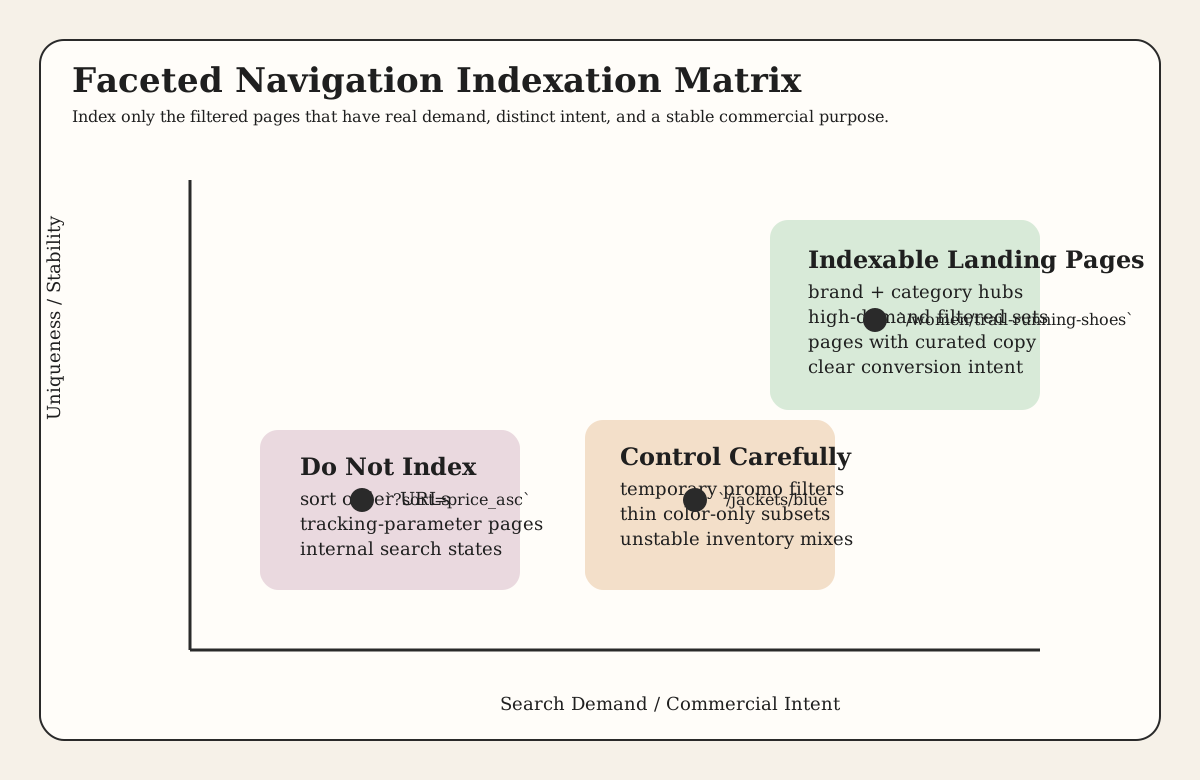
The better approach is to separate faceted pages into two groups.
Pages worth indexing
These usually have:
- real keyword demand
- clear commercial intent
- a stable filter set
- a useful product collection that can be curated
Example:
/running-shoes/women/trail
If users actually search for "women's trail running shoes" and the page consistently shows a strong product set, that filtered page can justify indexation.
Pages to control, not promote
These usually have:
- infinite combinations
- weak or duplicate intent
- no standalone keyword demand
- unstable inventory mixes
Example:
/running-shoes/women/trail?color=blue&size=38&price=100-150&sort=price_asc
That page may be useful for shoppers in-session, but it rarely deserves to exist as a search landing page.
In practice, the goal is:
- index the few filtered pages with real value
- keep the rest crawl-controlled with canonicals,
noindex, follow, and cleaner internal-link patterns - remove low-value URL types from sitemaps
URL Stability Beats Clever URL Experiments
Magento stores are especially vulnerable during migrations, upgrades, theme changes, and extension cleanup.
A URL structure change does not always trigger an immediate collapse. More often, it causes gradual instability:
- old paths remain accessible
- internal links point to mixed destinations
- canonicals stop matching the preferred path
- titles and metadata drift between versions of the same page
The result is diluted authority rather than one obvious error.
Imagine a home fitness store migrating from an older theme. Before the release, kettlebell category pages live on a clean path:
/kettlebells
After the release, filters and legacy rewrites leave all of these accessible:
/fitness/kettlebells
/kettlebells
/kettlebells.html
/kettlebells?mode=list
If canonicals, sitemaps, and internal links do not agree on the preferred version, the store has created four competing candidates for one ranking target.
That is why structural consistency matters more than URL cleverness.
Metadata at Scale: Automate the Repeatable, Handcraft the Money Pages
Magento catalogs are too large to manage metadata one page at a time. But they are also too valuable to automate everything blindly.
The right split is:
- automate product and long-tail category metadata with strict templates
- manually write titles and descriptions for top categories, brand hubs, and major campaign pages
For example, a templatized title pattern may work well for long-tail catalog pages:
{Brand} {Product Type} - {Key Attribute} | Free Shipping
That is efficient and usually good enough at scale.
But flagship categories need editorial control because click-through rate depends on nuance, not just completeness.
Compare these:
Trail Running Shoes - Lightweight, Waterproof, Wide Fit
versus:
Trail Running Shoes for Wet and Rocky Terrain | Men's & Women's Fits
The second title reflects intent more precisely. That matters more on pages competing for high-value terms.
Performance Is Often the Hidden SEO Bottleneck
Teams often assume weak rankings come from content gaps. On Magento, structure and performance are just as likely to be the limiter.
If two stores are close on relevance, the faster and more stable one often wins more crawl attention, better user engagement, and stronger overall SERP performance.
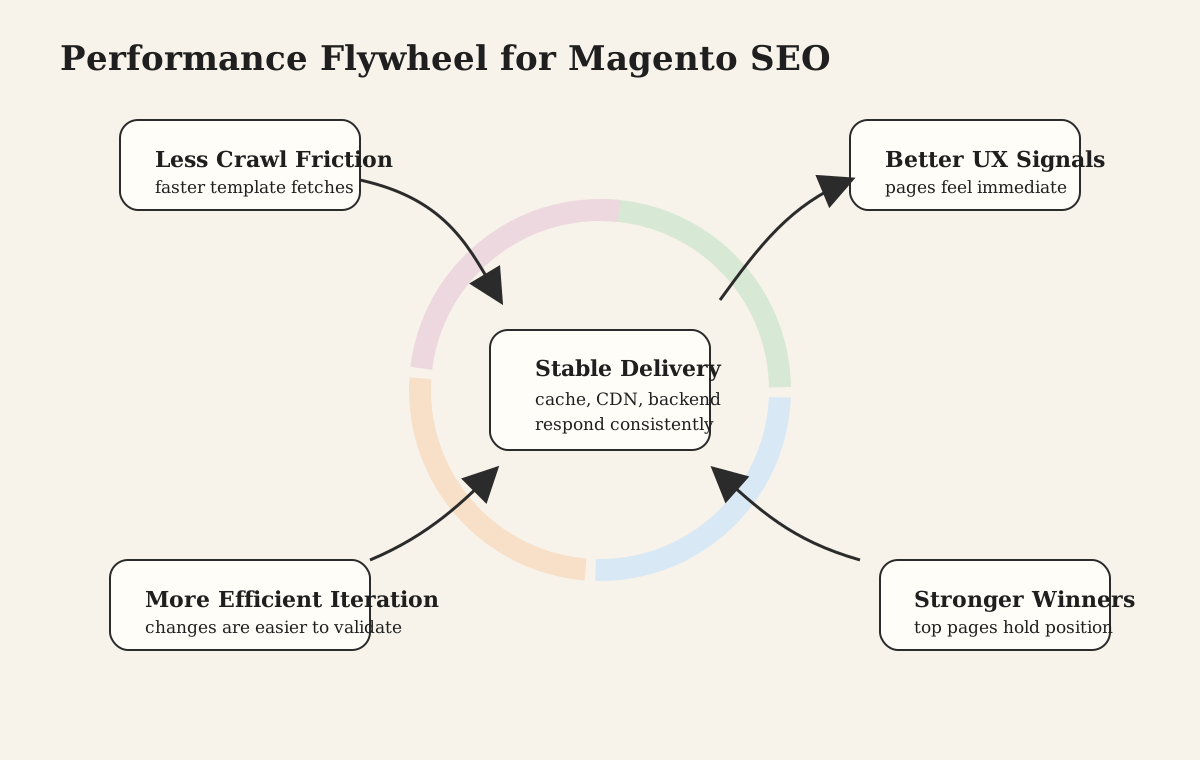
The most common Magento performance constraints are familiar:
- slow backend response times
- unstable or incomplete full-page caching
- extension-heavy front ends
- large JavaScript bundles
- too many third-party scripts
One of the highest-leverage improvements is usually not a flashy front-end trick. It is stabilizing the delivery stack:
- correct full-page cache behavior
- consistent CDN and cache headers
- reduced extension overhead
- leaner third-party tag loading
A practical example:
An outdoor gear store sees good impressions on category pages but poor ranking movement on competitive terms. Content is already solid. The deeper issue turns out to be a 1.8s backend response time on uncached requests and inconsistent cache variation across customer contexts. After fixing cache keys, pruning unused modules, and reducing tag-manager overhead, the store improves both crawl efficiency and page experience. Rankings do not jump overnight, but the entire category set becomes more stable.
That is the real pattern: performance fixes support SEO because they reduce friction in crawling and browsing, not because Google rewards speed in isolation.
Rich Results Depend on Technical Trust
Rankings are not the only thing that determines organic performance. Snippet quality matters too.
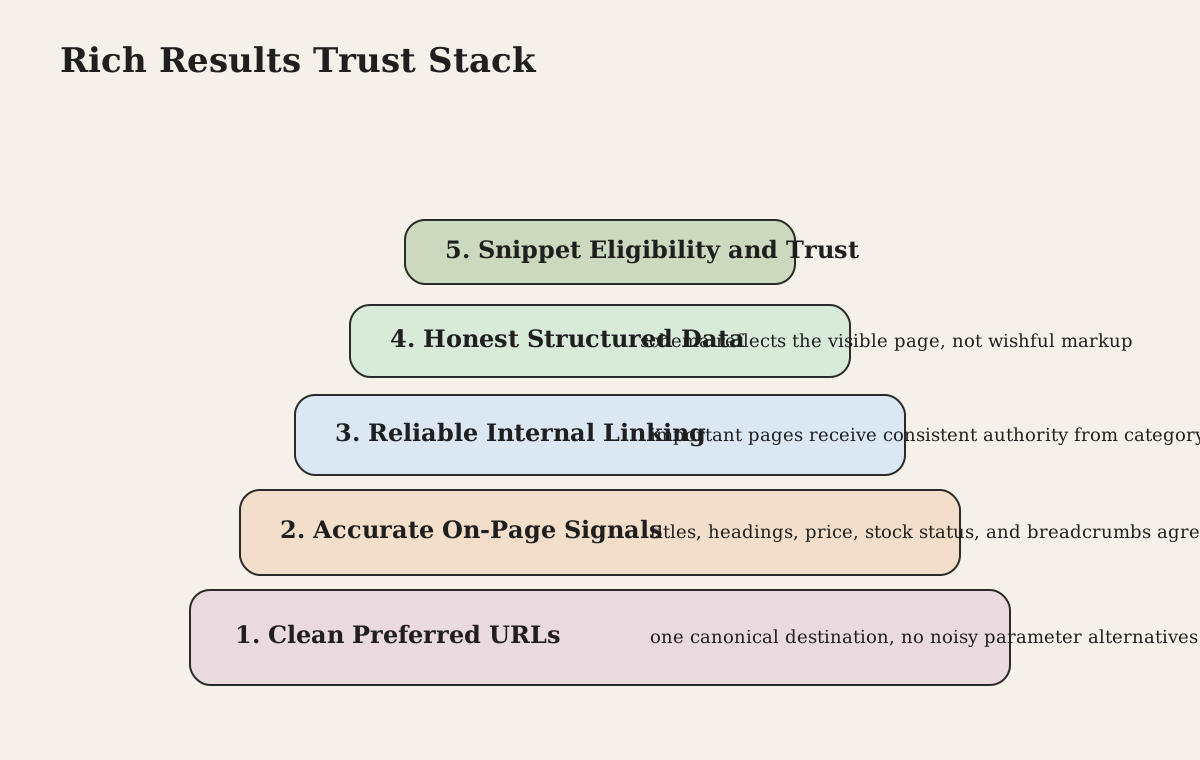
For Magento stores, technical trust is built through:
- clean titles
- correct canonicals
- strong internal linking
- accurate structured data
- stable product signals such as price, availability, and ratings
Structured data helps when it is accurate and consistent.
It hurts when it is spammy, incomplete, or contradicted by the visible page.
A useful standard is this: markup should describe the page you actually have, not the snippet you wish Google would show.
If a product page says "out of stock" in the HTML but the schema still reports InStock, eligibility and trust both suffer.
Extensions Should Standardize, Not Compete
Magento extensions are useful when they make rules more consistent and maintenance easier.
They become dangerous when they overlap.
The safest philosophy is to keep one source of truth for:
- canonical logic
- metadata generation
- robots directives
- schema output
Every extra SEO-related extension increases the chance of:
- conflicting tags
- duplicated logic
- slower pages
- more fragile upgrades
That does not mean "never use SEO extensions." It means use them to scale a clean strategy, not to stack features on top of uncertainty.
Strong Magento SEO Is a Release Process
The stores that compound organic growth usually treat SEO as infrastructure, not as a quarterly task list.
They have:
- clear indexation rules
- stable internal linking logic
- a defined canonical strategy
- repeatable release checks
- monitoring for drift after deployment
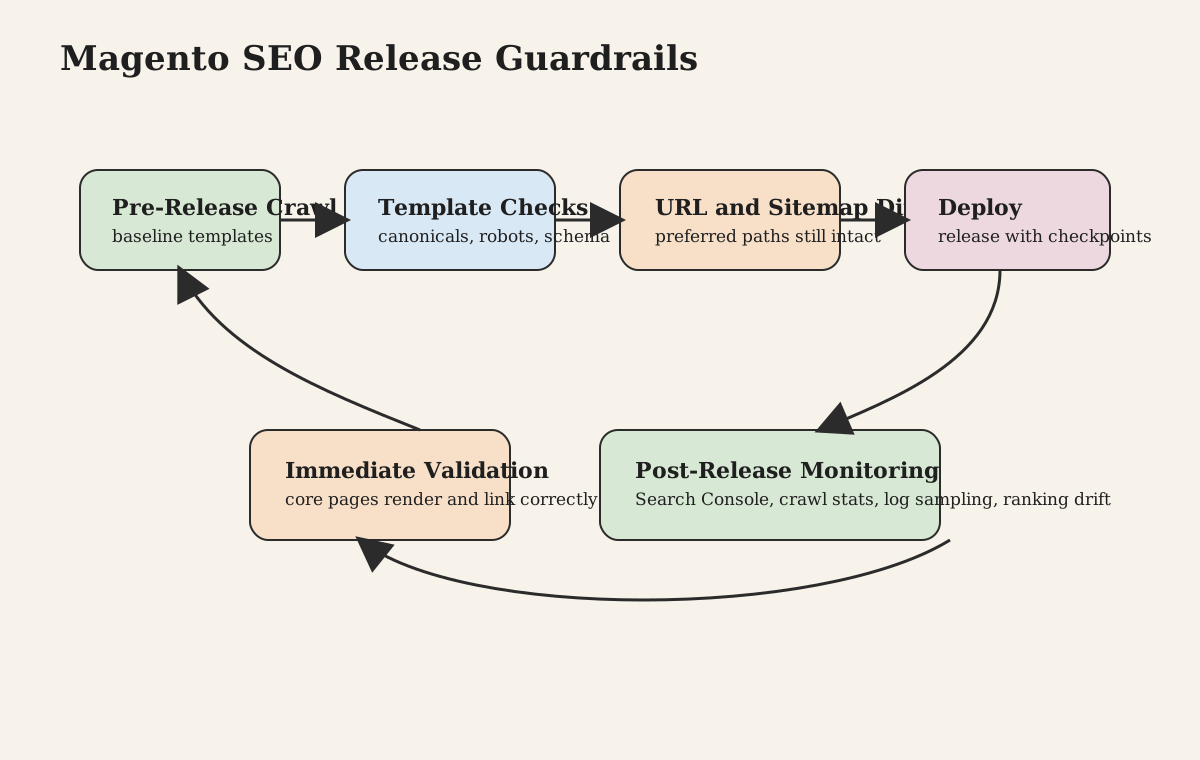
A lightweight release checklist catches more SEO damage than most rescue projects:
- Re-crawl core templates after every release.
- Check canonicals on products, categories, filtered pages, and pagination states.
- Confirm robots directives on internal search, parameter pages, and campaign URLs.
- Review sitemap deltas.
- Watch Search Console for crawl and indexing changes in the following days.
This matters even more on stores with headless or PWA layers, where routing and rendered HTML can diverge from what the team sees in the browser.
A Simple Five-Pillar Model
If a Magento team wants one practical framework, it is this:
- Index control: define what deserves to exist in Google.
- Structural authority: ensure internal links reinforce preferred landing pages.
- Technical performance: keep pages fast, stable, and cacheable.
- Intent alignment: match metadata and page content to real demand.
- Continuous monitoring: treat drift as inevitable and catch it early.
That is enough to explain why some stores plateau while others compound.
The compounding stores are rarely the ones making the most SEO noise. They are the ones running the cleanest system.
Final Take
Magento SEO gets easier once teams stop treating it like a collection of isolated tactics.
The durable advantage comes from structural clarity:
- one preferred URL for each purpose
- a limited set of indexable landing pages
- metadata rules that scale cleanly
- performance that supports crawl efficiency
- release discipline that prevents drift
At scale, the best SEO move is usually not adding more pages.
It is removing ambiguity from the ones that already matter.